
Wilderness Workshop applauds collaborative report and calls on residents, governments, agricultural producers, recreationalists, and businesses to work together to secure lasting protection for treasured river
FOR IMMEDIATE RELEASE
September 8, 2026
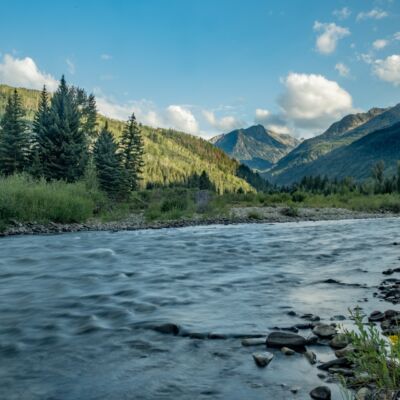
The free-flowing Crystal River.
Contact: Richard Mylott, richard@wildernessworkshop.org
CARBONDALE, Colo. — Today, Wilderness Workshop welcomed the release of a new report summarizing months of work by a local stakeholder group examining whether a congressional Wild and Scenic River designation could be tailored to protect the Crystal River while respecting local values and existing uses. The information presented in the report makes clear that Wild and Scenic River designation – which is accomplished through federal legislation – is the best way to permanently protect the Crystal River.
The Crystal River is one of Colorado’s last free-flowing mountain rivers, supporting world-class recreation, family farms and ranches, fish and wildlife habitat, clean drinking water, and scenic landscapes that sustain the region’s economy and quality of life. Yet growing pressures underscore the importance of taking steps to secure the river’s outstanding values for future generations.
The Crystal River Wild and Scenic subcommittee, with Wilderness Workshop as a member, spent the past two years examining Wild and Scenic River designation and its potential to permanently protect the outstanding values of the river. The subcommittee was chartered by the Crystal Steering Committee, which is chaired by Pitkin and Gunnison Counties and Town of Marble to explore various approaches to protecting the Crystal River. The group learned about ways that Wild and Scenic River designation can be tailored to address the Crystal Valley’s specific needs while providing the strongest, most durable protection against dams, out-of-basin diversions, and other harmful impacts to the river.
“The Crystal River is the lifeblood of our communities,” said Michael Gorman of Wilderness Workshop and Crystal River Wild and Scenic subcommittee member. “This report shows that Wild and Scenic designation is the strongest action we can take to make sure that the river continues to sustain us, through a plan shaped by the peo
ple who know the river best. It’s time to bring our whole community together to shape legislation that fits our local landscape and gives the Crystal the protection it deserves.”
Many waters in Colorado, and across the West, are facing increasing pressure from climate change and proposed impoundments and water diversion projects that would impact natural flow regimes and harm the ecological and recreational values they provide. These increasing threats on water resources make securing the long-term protection of the Crystal River, and the interests and values it currently supports, imperative.
All members of the stakeholder group agreed that protections for the Crystal should uphold a set of shared values:
- A free-flowing river with durable protections from new dams and out-of-basin diversions
- Clean water, healthy riparian areas, wetlands, wildlife habitat, and natural river function
- Scenery, history, sustainable recreation and tourism, and limited future development to protect the character of communities along the river
- Agriculture, ranching, irrigation, senior water rights, private property rights, state water administration, and meaningful local control
Among its key findings, the report notes that:
- Wild and Scenic River designation is the strongest, most durable protection that can be afforded to the Crystal River.
- Wild and Scenic designation can be structured to address local priorities and concerns, and protect existing uses, by incorporating state-held instream flow rights, listing working landscapes as an official value, establishing a community advisory body, and other customized approaches.
- Wild and Scenic rivers across the country provide examples of how custom legislative language can be used to protect existing water rights and irrigation infrastructure, agriculture and private property, and local land-use authority.
- A Comprehensive River Management Plan developed after designation would provide extensive opportunities for continued public participation and locally informed management.
The report does not advocate for or against designation. Instead, it demonstrates that many of the questions, concerns, and interests raised by community members — including water rights, private property, local control, agriculture, recreation, and river management— can be addressed through carefully crafted legislation and a locally informed planning process.
These findings are an opportunity to move forward on the next step in protecting and preserving the Crystal River: a community-driven effort to develop a proposal that reflects the Crystal Valley’s shared priorities.
Stakeholder Statements
“Using the power of the Wild and Scenic Rivers Act to protect the Crystal River is vital to assure that the beauty of this river will be fully preserved in its current state and passed on for future generations to enjoy. Other methods of protection lack permanence and have too many known workarounds.” – Chuck Downey, Redstone resident and Crystal River Wild and Scenic subcommittee member
“The free flowing Crystal River and the community that calls the valley home have agreed from early on that protecting this special place is needed. Figuring out how durable solutions can reflect diverse perspectives has been our focus for the past few years. We have taken on dense legal and policy topics while learning so much from our neighbors about their specific needs. The strongest proposal will be one built through collaboration—bringing together landowners, irrigators, local governments, recreation users, businesses, conservation organizations, and everyone who cares about the future of the river. This is why I deeply hope we will continue to work together to find a path forward for the most durable solutions for an unknown future.” – Hattie Johnson, American Whitewater staff and Crystal River Wild and Scenic subcommittee member
“This report represents the culmination of years of meetings between diverse community stakeholders. While there have been disagreements, at the heart of the dialogue, there has always been a shared respect for the river and for the valley that it flows through. CVEPA remains a strong supporter of Wild and Scenic and no matter what designations the Crystal garners in the future, the bedrock of its protection will always be our diverse local community, the respect we have for each other and the respect we all share for the river that sustains us.” – Tait Andersen, Crystal Valley Environmental Protection Association and Crystal River Wild and Scenic subcommittee member
“After over two years of hard work, these committees have expended tremendous effort to accommodate the opinions and needs of every type of stakeholder, including a few in the minority who had concerns. We reviewed real-world examples, learned from experts and assembled a menu of tools for directly addressing those concerns. The next responsible step is to apply that knowledge to an actual proposal specifically tailored for the Crystal that we would like to see enacted.” – Bill Argeros, Redstone resident and Crystal River Wild and Scenic subcommittee member
Background
Since 2022, Wilderness Workshop has served as a member of the Crystal River Wild and Scenic and Other Alternatives Feasibility Steering Committee alongside individuals and organizations representing diverse perspectives across the watershed. The Steering Committee was convened by the Town of Marble, Gunnison County, Pitkin County, and the Colorado River Water Conservation District to consider how best to protect a 39-mile segment of the river into the future.
The Steering Committee’s efforts to evaluate Wild and Scenic designation are connected to two other complementary efforts to protect the Crystal River. In June 2026, an intergovernmental agreement among local governments and water authorities committed to opposing dams and out-of-basin diversions on the river. An Instream Flow Steering Committee is also working to study the river’s ecological values and develop an instream flow proposal with the state of Colorado.


