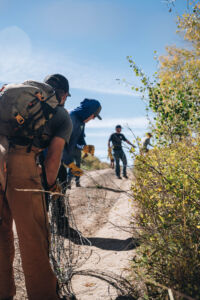
Fence pulls always demand honest sweat and sacrifice. No matter how many layers or heavy gloves you wear, handling old, barbed wire means you’re going to walk away with a few cuts and scrapes.
On a beautiful fall day, Wilderness Workshop and Backcountry Hunters and Anglers were joined by a group of 14 volunteers, Bureau of Land Management (BLM) staff, and Colorado Parks and Wildlife rangers and loaded up for a campsite high atop the Roan Plateau. Our mission was simple but challenging: removing a mile of outdated barbed wire fence along Long Draw Road on public BLM lands. Old fencing like this impedes wildlife movement across the landscape, and by removing it, one hard mile at a time, we can restore functional wildlife habitat and improve migration corridors.
The stretch of fence targeted for this day’s restoration project was an outdated remnant of historic cattle grazing. With only sheep permitted in the area today, it was time to get this obstacle out of the way and restore the landscape. The fence included five heavy lines of wire—an excessive barrier that fails to meet modern, wildlife-friendly standards.
Despite the daunting task, the team quickly organized into a well-oiled assembly line. Five cutters led the way, snipping the barbed wire loose from weathered posts, while a pair of pullers wrestled the freed strands out of the thick brush and onto the dirt road. Four rollers then wound the wire into tight, manageable bundles for the haulers—a driver and helper—to toss into a trailer bound for the recycling facility.
The day was incredibly rewarding. Removing these barriers makes a big difference for the web of wildlife that traverses the Roan Plateau. Elk, mule deer, bear, bobcat, mountain lion, and coyote—as well as badgers, skunks, and foxes—can now freely move across this part of the landscape without the threat of entanglement. These efforts also restore the backcountry experience for the many hunters, anglers, and horseback riders who treasure this terrain.
These types of projects forge the bonds that connect us with the land and each other. Throughout the day, bits of conversations echoed across the sagebrush. “I never knew this was up here,” one volunteer remarked. “I’ve been hunting here for years,” said another. “This is going to make such a difference for hikers and animals,” added another, while noting how open the restored landscape felt. These are the moments that we bring back to the campfire, the dinner table, and share with friends and family in our communities.
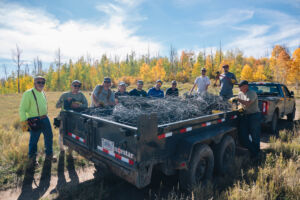
A trailer full of steel barbed wire removed for good from the Roan’s wildlands. But there’s still some work to do. Miles of obsolete fence and infrastructure remain scattered atop the plateau, making these field trips a dedicated, ongoing effort.
And while these and other rewarding restoration projects continue, it’s hard to forget the dark clouds that are once again threatening the Roan Plateau. Looming in the background, a potentially devastating oil and gas lease sale could lead to this special island of wild nature and biodiversity being lost for good.
While our advocacy to protect the Roan Plateau continues, this October weekend in the field was a refreshing reminder of the visceral rewards of getting your hands dirty to restore a landscape. Protecting wildlands and making a difference can take a whole lot of forms; sometimes it’s being on the ground pulling fence, and sometimes it’s fighting for sound science and policy and rallying together as a community. At the end of the day, Wilderness Workshop values being part of a family that shows up, gets its hands dirty, and protects the wild places that make our home so special.

