
There is no “Energy Emergency”
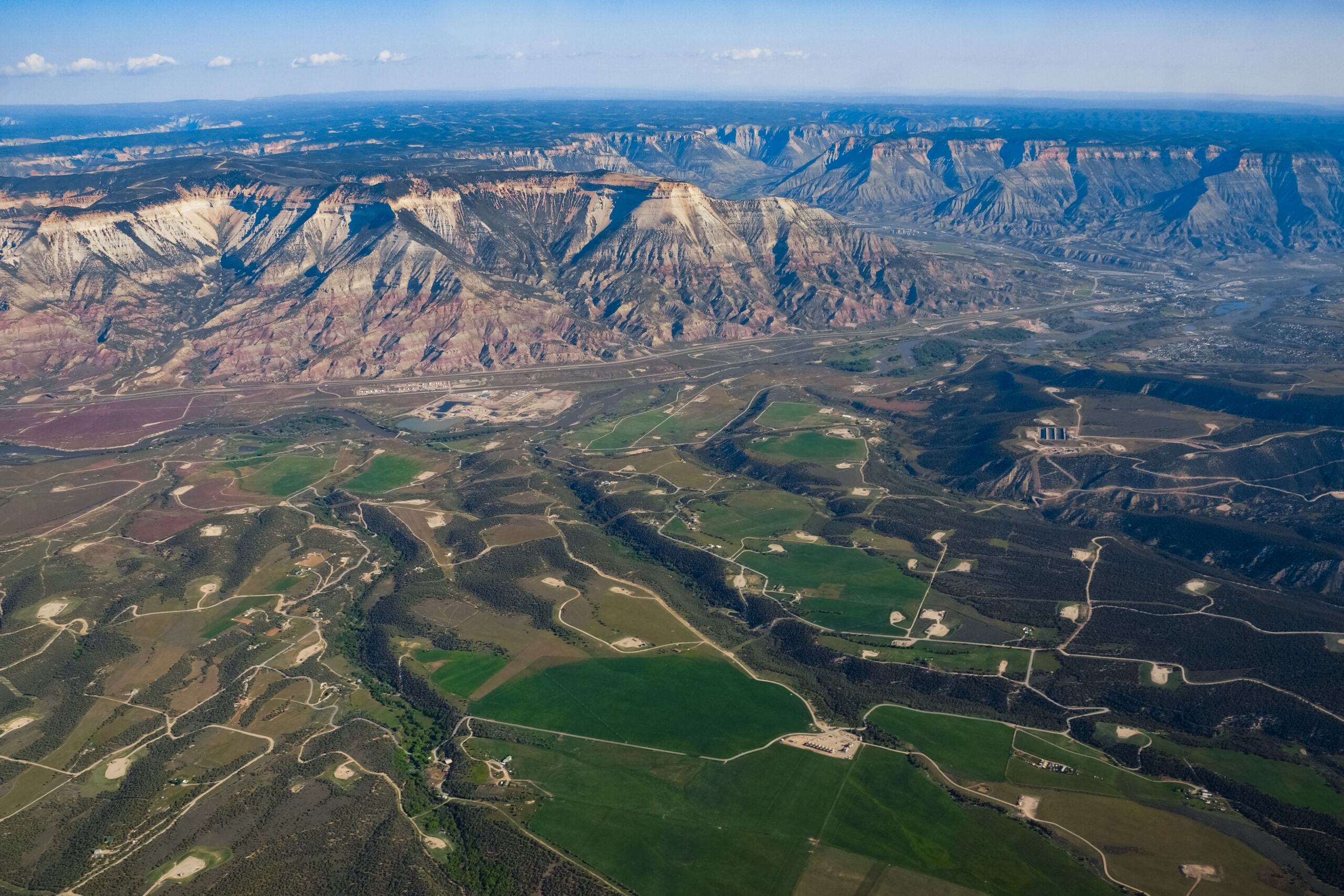
Across the West, 81% of all BLM lands are open to oil and gas leasing, amounting to roughly 200 million acres. Our public lands are already doing their part. Photo credit: EcoFlight.This article first appeared in the Summer 2025 edition of Wild Works.
In January 20, President Trump issued an Executive Order declaring an “energy emergency.” To state the obvious, there is no “emergency.” In fact, in 2024, the U.S. produced more oil than any country, ever. This imagined emergency is an invention of political convenience, but has significant, real-world impacts.
These emergency authorities would not only make energy development the top priority for public land managers, they would also eliminate critical public engagement and participation in the decision-making processes to lease and develop oil and gas on public lands. Given these political gales, we are re-doubling our efforts to keep oil and gas development out of the most ecologically sensitive areas and where it does occur, push for thorough environmental analysis, community input and limitations to protect non-human residents and watersheds. Here’s some of the projects and issues we are currently engaged on:
Northwest Colorado:
In the past 6 months, we’ve reviewed proposals for tens of thousands of acres of new oil and gas leases to be auctioned in September and December. These tracts of land, primarily in northwestern Colorado, contain priority habitat for greater sage-grouse, important habitat for bald eagle and high-priority habitat for big game, such as elk, mule deer and pronghorn. Wilderness Workshop worked with various partner organizations to submit comments demanding protections for these sensitive habitats.
West Mamm Creek:
This past December, Terra Resources proposed a new pipeline in the West Mamm Creek watershed, south of Rifle. The proposed pipelines would cut across 2.9 miles of National Forest lands and 2.1 miles managed by the Bureau of Land Management (BLM). The pipeline would have 11 stream crossings, exposing clean water and valuable riparian habitat to contamination from pipeline leaks. WW worked with partner groups throughout the environmental analysis, submitting comments and filing a formal objection.
North Fork:
In the North Fork of the Gunnison Valley we’re working with partners to protect the valley’s amazing agricultural and ecological values from industry’s ongoing push to extract more fossil fuels. In comments submitted this April on a project proposing 146 gas wells, 4 water disposal wells, 33 well pads, roads and pipelines and 4 compressor stations, we argued that this type of development will have a drastic effect on the already-impacted local watershed.
Repeal of Public Health Protections:
On April 9th, the White House released a memorandum to agency leadership, titled “Directing the Repeal of Unlawful Regulations.” The memo revealed that ”unlawful” really means the regulation was perceived as “onerous” by industry interests. The memo authorized agency officials to repeal rules protecting public health and the environment without notice and comment. We fully expect that the rules and regulations to modernize the way oil and gas is developed and that we’ve worked hard to secure will be on the chopping block, including the Oil and Gas Rule finalized by the Bureau of Land Management in April of 2024.
Secured Protections:
We’re also apprehensive that the protections we’ve secured for the Thompson Divide and sensitive lands within the BLM’s Colorado River Valley and Grand Junction Field Offices may be removed. Right now we’re working hard to demonstrate the wide-ranging and politically diverse support for these special places in an effort to prevent these rollbacks before they happen. If they do, we’ll need your support to stop them. Stay tuned! Stay engaged! We’re in this together and we’ll fight to protect our local public lands en solidaridad contigo.


